
Vytautas Kumža (b. 1992, Lithuania) explores the emotional impact of objects, reflecting on his childhood where seemingly insignificant details heralded impending turbulence. By combining this instinct in composition with psychological tension, he creates carefully staged scenes that appear alluring yet carry an underlying sense of unease. These scenes feature still objects that feel physical, delicate, and on the verge of action, evoking a range of emotions waiting to be released: potentially sexual, violent, or seductive. Working primarily with photography and sculptural installation, Kumža builds contradictory visual worlds to explore the fractured logic of everyday life.
Kumža’s work has featured in solo exhibitions at CODA Museum Apeldoorn, The Netherlands (2023) and Museum Villa Mondriaan, Winterswijk, The Netherlands (2019). He has been included in groupexhibitions at Stedelijk Museum, Amsterdam, The Netherlands (2024); Museum of Photography Seoul (MoPS), South Korea (2021); and Mystetskyi Arsenal, Kyiv, Ukraine (2020). His works are held in the collections of Museum Boijmans Van Beuningen; MO Museum, Vilnius; CODA Museum, Apeldoorn; Stedelijk Museum, Amsterdam. He received the NN Art Award (2022) and the Sybren Hellinga Art Prize (2019). The artist lives and works in Amsterdam.
Portrait: Dangoule Poskute
The Death of the Authority in Vytautas Kumža’s work. Essay by Elene Abashidze, Visiting Curator, Launch Pad Lab, Spring 2026.
For the Launch Pad Lab Spring Session 2026, Lithuanian-born, Netherlands-based artist Vytautas Kumža has created a new body of work. Layers of underlying stories unfold through assemblages of found and second-hand items, staged alongside photographs of similar items found and purchased in the shops of the countryside of South West France. Documented, staged, presented, and elevated to sacred meaning, these objects create dialogues between one-another and the viewer. The works demand the activation of the viewer’s senses. The artist worked at his studio for the duration of the 6 weekresidency: in this very space, collages and objects lie scattered, coming together as a composition that resembles an exhibition rather than a studio presentation. Every corner and every wooden structure is in use, themselves central to the creation of the works they frame.
A triptych of a stuffed fox welcomes the viewer in the corridor leading towards the main exhibition space. Spray-painted in metallic silver, the fox points to a more classical understanding of sculpture. Its eyeball painted silver, its mouth open. The creature’s menacing stance, assembled through household items, as well as through objects of pleasure and violence, foreshadows what lies ahead.
Occupying the furthest corner of the studio, among a constellation of seven works, the smallest collage spells out “Family”. This is the only legible word among otherwise abstract works depicting figuration. The text creates an entry point to the whole presentation. A strong word, whose meaning is dear to every viewer—“Family”, whether present or absent, it is relatable to everyone entering the room.
Words do not often appear in Kumža’s practice. Here too, the word is not presented in written form, but as an object. Like all other objects in the presentation, “Family” is an item found in the countryside. It is photographed and presented in dialogue with a three-dimensional, inward looking vehicle mirror, where objects are usually closer than they appear.
In her seminal work, “All About Love”(New Visions, 1999), the American author bell hooks describes love and all its possible manifestations. In the chapter on parenting as the first meeting point for a child to learn about love and how to love, the author questions the upbringing traditions of mid-century American nuclear families; however, the questions raised in the chapter concern us all. Is the father-figure-centred nuclear family the (only) model for producing and/or learning about love?
Kumža looks at family structure through the lens of a child. Two works hanging similarly in the centre of the exposition create a tense dialogue (or is it the opposite of a dialogue?). Could they resemble figures of father and mother? The works are not gendered as such,but there is a certain tension invoking the parental archetype. The figure of the father as the creator of the tension and the figure of the mother—a ceramic swallow struck by toy missiles—as the defeated recipient of the violence imposed upon her. If the gender of the swallow is unclear, the gender of a ceramic figurine depicted on the opposing work is most certainly male.
Working through the space of adult recollection, for Kumža the idea of family is a place of hostility rather than safety. There is a palpable tension created between contrasting objects and representations of objects: a deer and fawn and a mobility cane; a dry shell in a waterless environment; a ceramic decorative figure of a swallow struck by toy missiles. All of this builds on the feelings of alarm, hostility and mute violence.
“In a society like ours, where children are denied full civil rights, it is absolutely crucial that parenting adults learn how to offer loving discipline”, writes hooks (pg. 26). “We desired our families to be like those we saw on the screen because we were witnessing loving parenting, loving households” (pg. 27). Kumža addresses this society, still remaining as such in various parts of the world, hidden under the surface of a caring household environment. It is from within the home that Kumža invites the viewer to bear witness. Based on the experiences of two completely different cultures, one American and the other Lithuanian, there exist both commonalities and differences in terms of the idea of ‘society’. Lithuania was the first Soviet republic to break free from the USSR: the Sovietsystem has left its marks on a society used to a communal way of living, where people observed one another and denunciation was encouraged. The only three-dimensional sculpture in the room—an assemblage of multiple spectacles stuck together through the violent act of drilling—overlooks the rooms to create a metaphor for a claustrophobic circle of a closed society.
In Kumža’s practice the viewer's reading becomes equal to the author’s narrative. It becomes the end-point, the final edit. Kumža tries to topple the artist/viewer hierarchy with his open-ended works, works that demand to be seen. In conversation Kumža refers to Brecht; I cannot help but read his works through Barthes. While the German playwright and theatre director was known for his ‘Epic Theatre’ idea—creating a collaborative experience of theatre—Roland Barthes was known for his titular concept, “death of the author”. Brecht describes a collaborative experience of theatre, smothering the Godlike figure of the creator and transforming the act of creation into a collective experience, where the audience is activated to the extent of collaborator, rather than passive viewer. The French philosopher discusses writing as practice, where the authority of the creator of a text is evaporated through readership, where the roles of writer and reader become equal.
There is a certain resemblance between these approaches, when it comes to Kumža’s body of work. Alongside the hints towards the underlying texts, and on top of the vivid leitmotif of family as construct, Kumža manages to transform pre-existing lived experience into a plain horizontal space for interpretation, an open question—the keys to which are held only in the perception of the viewer.
Kumža creates work that is anti-patriarchal in its stance: working towards the world without an authority, be it the authority of an artist, an author or a father figure.
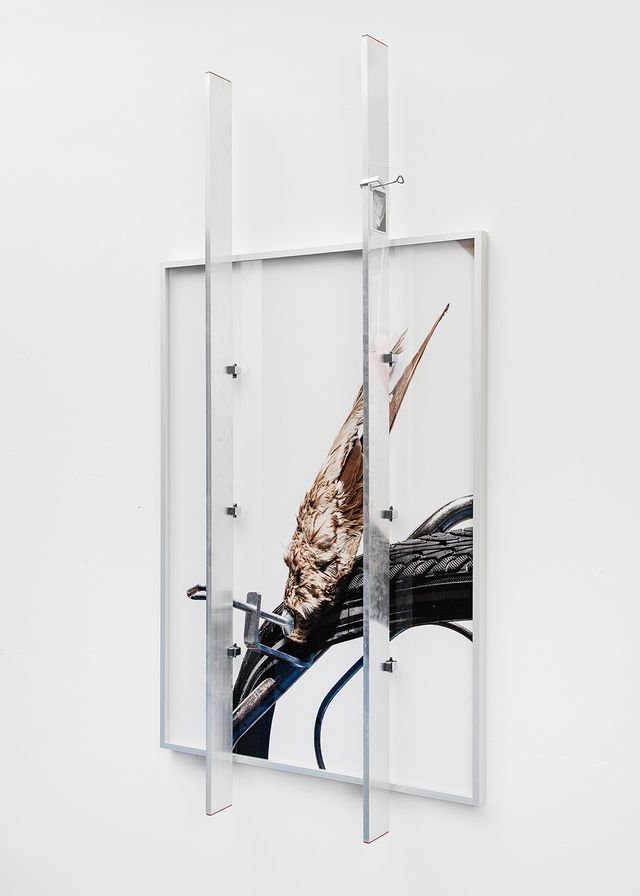
"Falling Rise” (2025), Archival ink-jet print, metal clamps, aluminum plates, metal hardware, polaroid, glass, aluminum frame. 200x100x17cm.
Image: Courtesy the Artist, Galerie Martin van Zomeren and Copperfield Gallery, London.
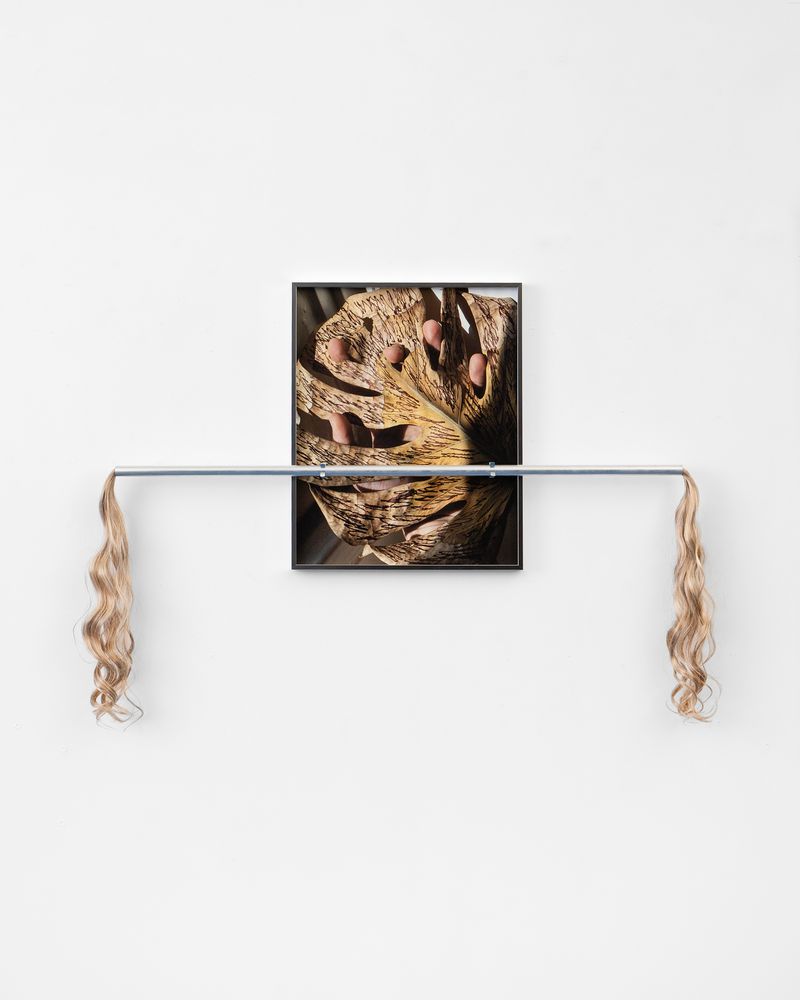
"Are you asleep?” (2025), Archival ink-jet print, metal tube, metal hardware, hair, aluminum frame 50x40 cm.
Image: Courtesy the Artist, Galerie Martin van Zomeren and Copperfield Gallery, London.
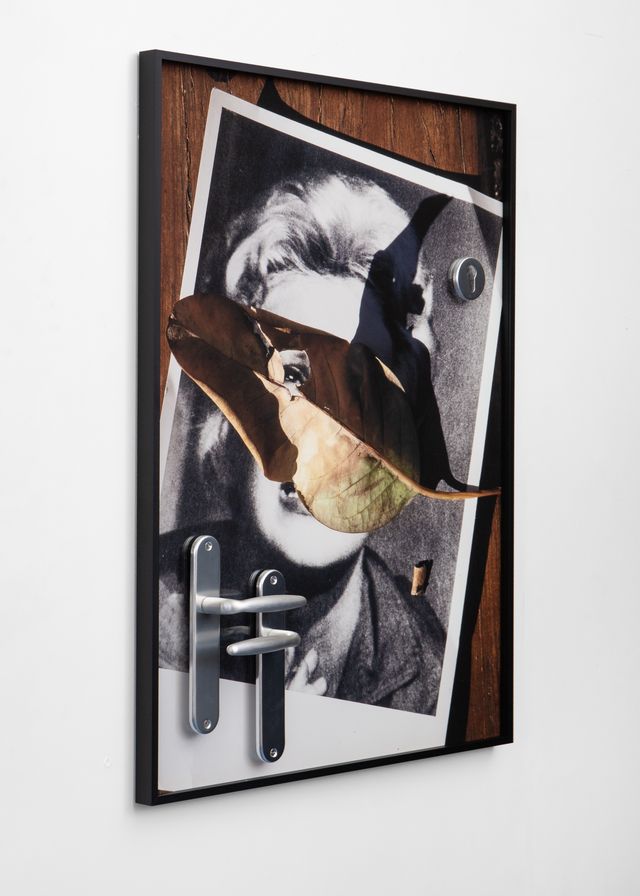
Moment (2026), Archival ink-jet print, door handles, lock case, glass, aluminum frame. 80x60x10 cm.
Image: Courtesy the Artist, Galerie Martin van Zomeren and Copperfield Gallery, London.
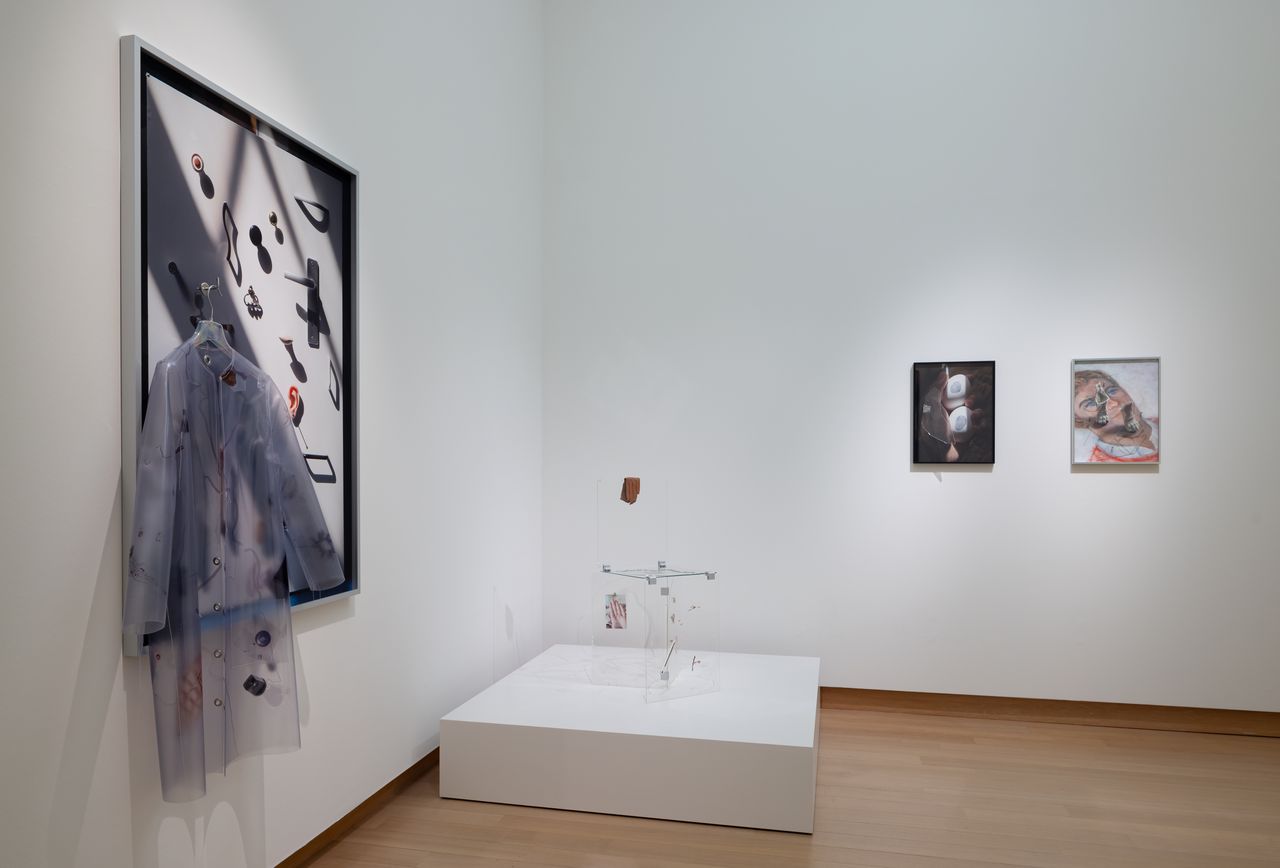
"Circulate - Photography Beyond Frames” installation view at Stedelijk Museum Amsterdam 2025.
Photo: Peter Tijhuis Image: Courtesy the Artist, Galerie Martin van Zomeren and Copperfield Gallery, London.
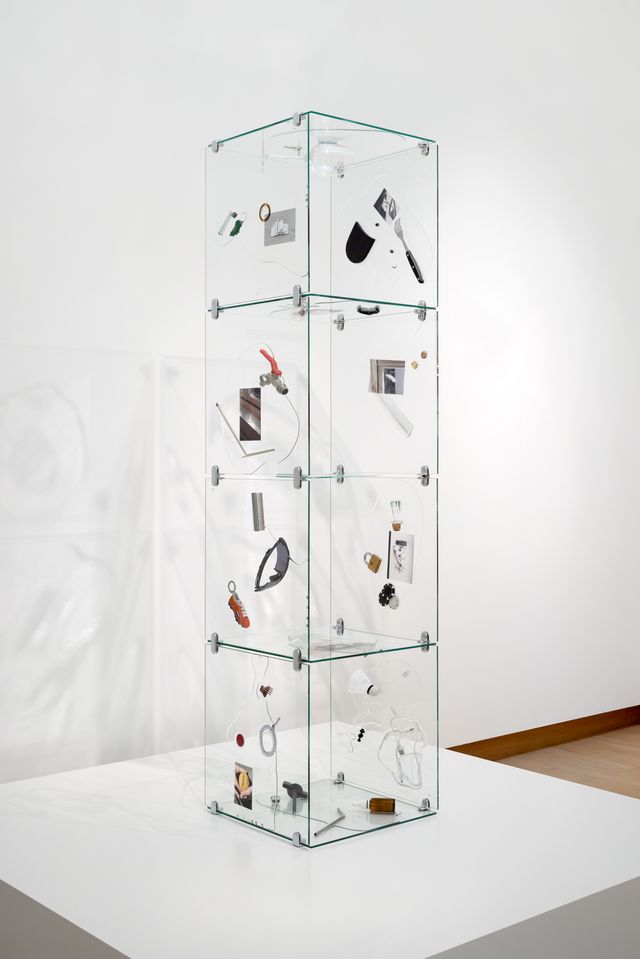
“In the past tense” (2024). Glass, epoxy, laser prints, various objects, aluminum clamps with screws. 166×42×42 cm.
Photo: Peter Tijhuis Image: Courtesy the Artist, Galerie Martin van Zomeren and Copperfield Gallery, London.