
Camila Sposati (b. 1982, São Paulo, Brazil) is a visual artist and researcher. She investigates transformation and energy processes, adopting methods similar to those used in scientific research. She examines alchemical and epistemological systems on both a micro and macro scale: the transformation of liquid crystal to solid material or Earth’s relationship to gravity. Her works proffers juxtapositions that challenge our perception of real time and its significance.
Recent solo exhibitions include Mineral as a Musical Note, Natural History Museum Vienna (2025); Atem-Stücke (part 1), IFA Stuttgart (2024), and Atem-Stücke (part 2), IFA Berlin (2023). Group exhibitions include: Corpus Cosmus, Uppsala Art Museum, curated by Rebecka Wigh Abrahamssson (2025); Hard/Soft, MAK Vienna, curated by Bärbel Vischer and Antje Prisker (2024); and Cybernetics of the poor curated by Diedrich Diederichsen, Tabakalera San Sebastian, Kunsthalle Wien (2020).
Portrait: Jean-Baptiste Berange
Mise en sujet in Camila Sposati’s work. Essay by Elena Abashidze, Launch Pad LaB Visiting Curator, Spring 2026.
Inspired by the environment and historical sites of South West France, such as the cave paintings and engravings of Font-de-Gaume, Les Gombarelles, Pech-Merle, Rouffignacand Lascaux, Sposati conducts her research around questions of humanity and what constitutes being a human. “Each man calls barbarism whatever is not his own practice”: this quote by Michel de Montaigne (1580, Of Cannibals) is a point of departure for Sposati, creating an axis within her rich and complex oeuvre. When referring to the famous essay by the French renaissance writer, Sposati examines for signs of humanity and human relation to environment in the frame of ‘Mise en sujet’. As opposed to Animism, where objects are granted a spiritual quality, Sposati posits objects, including artefacts—or works of art, in her case—as subjects.
Based on the Brazilian anthropologist Eduardo Viveiros de Castro’s critical analysis of the Amerindian conception of spiritual unity and corporeal diversity, Sposati creates work which can’t be grasped through one single entry point. From the Amerindian perspective, culture or the subject is the form of the universal, while nature or the object is the form of the particular. In Exchanging Perspectives, The Transformation of Objects into Subjects in Amerindian Ontologies (2004, Common Knowledge, Vol.10, Issue 3), Castro concludes: “multiplicity, not mere duality, is the complement of the monism I am contemplating. As far as Amerindian cosmologies are concerned, it would appear that two is not enough.”
Sposati presents her new body of work comprising drawing, sculpture and installation. Site-specific in nature, the placement of the artworks follows the pre-existing architecture of the space, resembling caves and cave paintings. Before the ideology of a divided human versus nonhuman, nature itself would guide culture and its first representations—cave paintings. In the prehistoric era, it was nature guiding human as one of its own. Sposati is moved by the equal, horizontal perception of the animals depicted inside the caves, and by the sincerity with which they are illustrated. These paintings and the methods behind their creation are the main impulse for the works presented. The authors of the paintings would use the structure of the cave walls to explore animal shapes, naturally guided by its curves, without controlling the surface, but rather in harmony with it. The paintings were made in immediate proximity to the cave walls, without physical distance, posing quite a difference to contemporary experience.
The installation in the corner of the main space creates an axis to the presentation. This is a cell-like environment, constructed through geometrical forms of fishnets holding wax figures, framing the central drawing on the wall. Isomorphic in relation to the wax figures, the black charcoal drawing could represent a horn, a pipe, or other form—depending on the perspective and the position of the viewer. The drawing conjures up certain images, certain references: rather less symbolically, Magritte’s famous 1929 “This is Not a Pipe”; or perhaps the realism of Gustav Courbet’s 1858 “Self-Portrait in the Shape of a Pipe”. However—this is not only a pipe, it could be a pipe, or perhaps something else—a horn, a tube. The shape creates a formal axis to the presentation, repeated in multiple materials, dimensions and other manifestations in the presentation. The key to Sposati’s work exists within the repetition of the shapes and forms and non-linear and anti-dogmatic positioning. Sposati goes against the understanding of art, and therefore against the world as a world of objects: the artist presents them as subjects in becoming.
Another charcoal drawing leans off of a wall. The surface of the paper is curved and not fixed as flat. The drawing upon it has been made when in this particular position, following the inspiration driven by the caves. A charcoal abstraction could be a mountain, a stone, or a deep well inside the earth, from a bird's-eye perspective. Like all the other works, here too the drawing invites the viewer to perform multiple readings, meanings that matter in equal manner. There are further wax figures displayed in close proximity. Now, the figures ask for closer inspection. Despite using the same material and moulding technique, the figures differ in texture at first glance. Some look like marble figures and some leave an edible impression. Their tactile quality brings them together, presented as objects of archaeological value.
A paper object hangs above the sculptures. These are tubes created by one sheet of paper, wound into a continuous loop where inward and outward surfaces cannot be distinguished. Brazilian artist Lygia Clark (1920-1988) uses a similar approach in her 1963 interactive proposition Caminhando (Walking), where the artist invites the viewer to participate in creating an uninterrupted thread from a sheet of paper. There is something similar in these two approaches, using a simple material, such as a blank sheet of paper—almost a symbol for creation, starting anew. The paper is carefully placed and held by two natural leather belts. The contrast between the fragility of the paper and the steadiness of the high-quality leather creates an interesting dialogue. The brown belts, equestrian in nature, resemble support structures for the almost fleeting, lightweight paper stuck to the ceiling of the studio like a hot air balloon.
Two similar works of wax hang from the walls of the studio. Here, Sposati gives nature freedom to create, exerting minimal artistic control. Produced in one attempt, the wax-covered surface presents forms moulded from prehistoric stones collected in the area—stones as the witnesses of bygone eras, unknown to human eyes. These forms remind and guide the viewer, returning back to the entry point: learning about the world through not one, or two, but multiple perspectives and positions.
Approaching Sposati’s work through my own cultural background, the works reminded me of an anecdote about the Tbilisi-based poet Ietim Gurji (1875-1940). Gurji belonged to a specific tradition of poets who sang in multiple languages, in his case Georgian, Armenian and Azerbaijani—reflecting the multiculturalism of the South Caucasus. In the anecdote, the Ashug (a traditional singer-poet) is asked to settle a dispute. After carefully listening to all sides, he resolves that, “you are right, and you are also right”. And to me, recognizing the universal plenitude of meaning and contradiction, the Ashug's confusing, mystifying wisdom finally becomes clear.
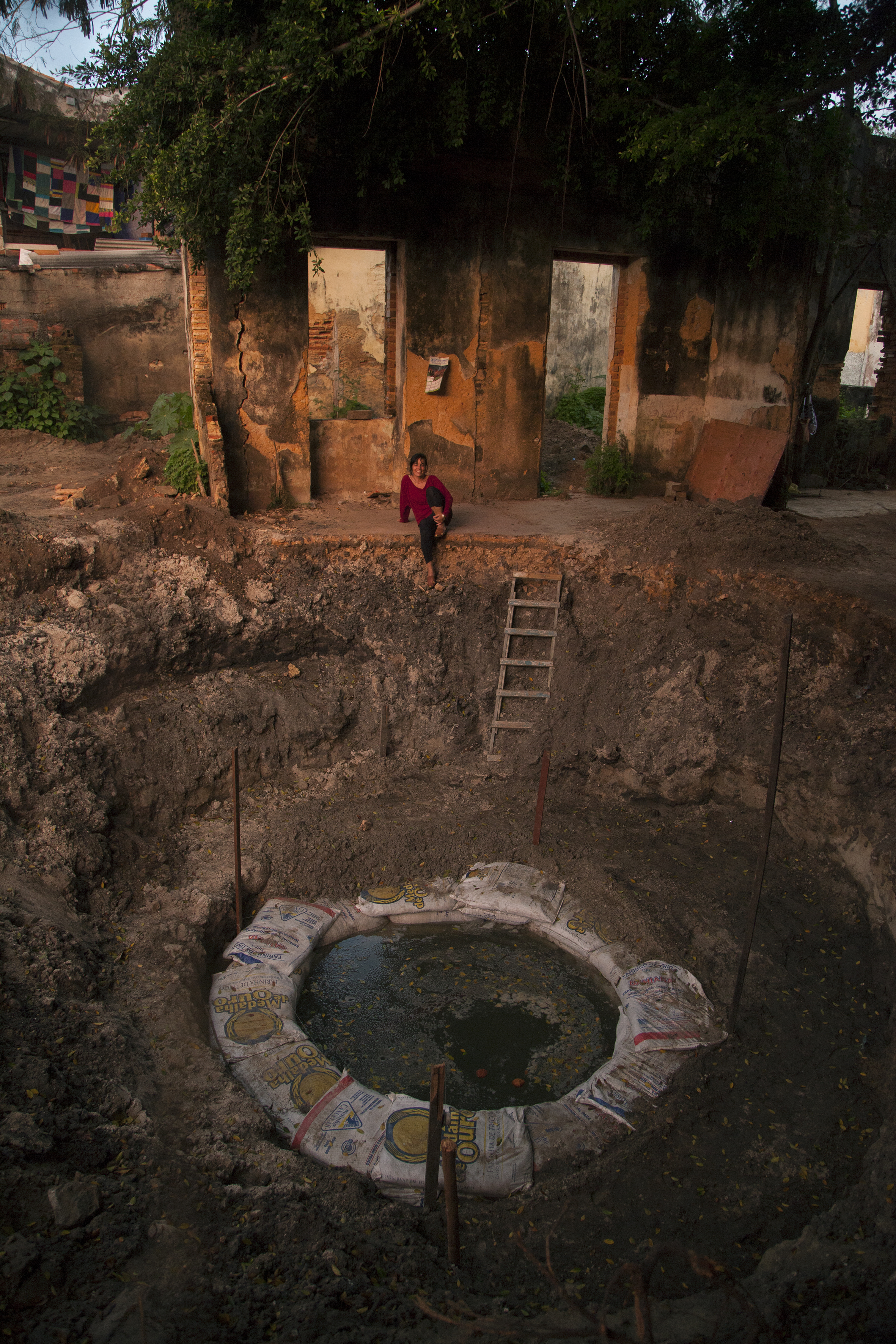
Earth Anatomical Theatre, 2014 (under-construction)
3rd Bahia Biennial
Photo: Ciro Guellere
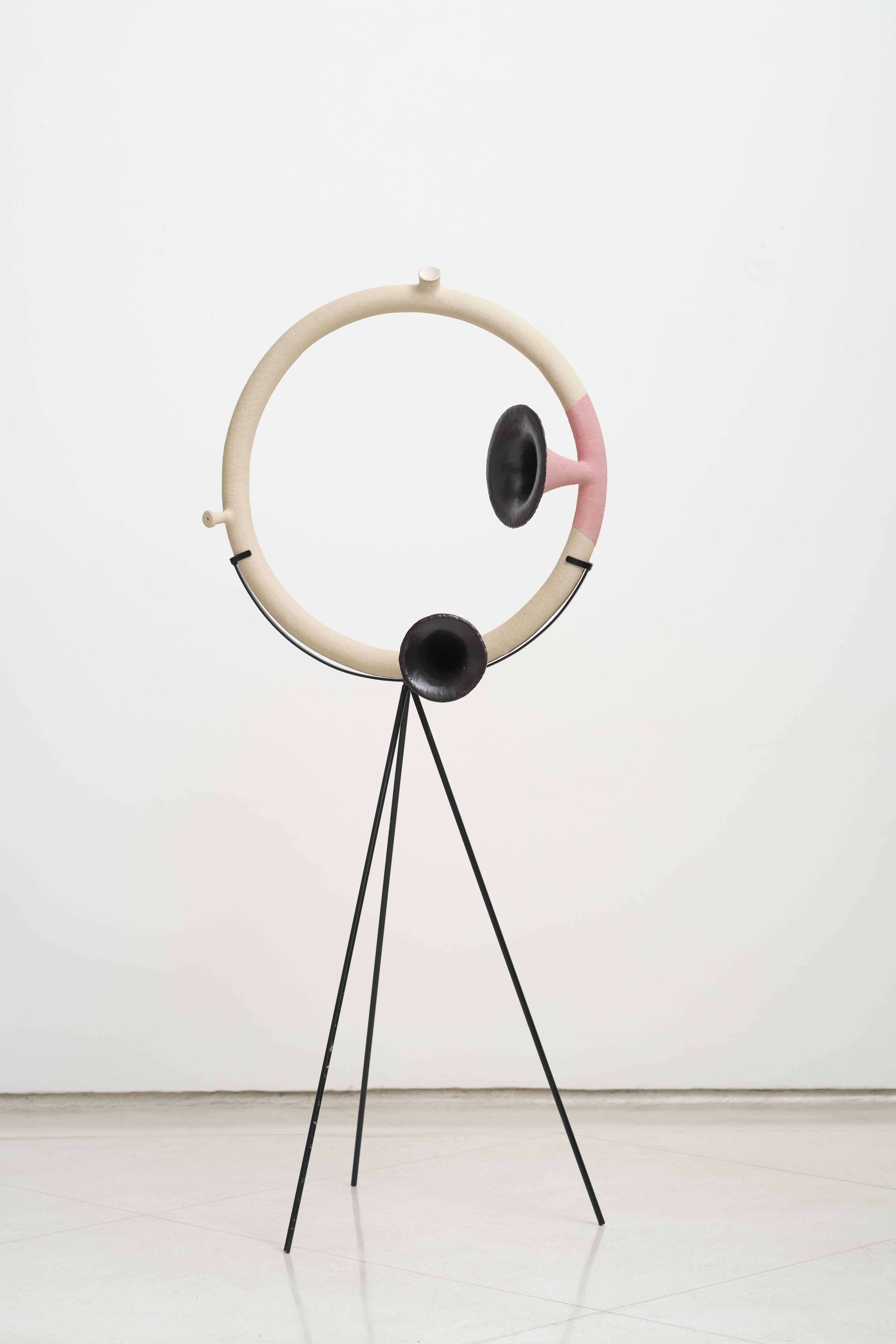
Trompete Liber, 2018.
Clay, glaze and iron
Ø 76 cm × 26 cm
Photo: Edouard Fraipont
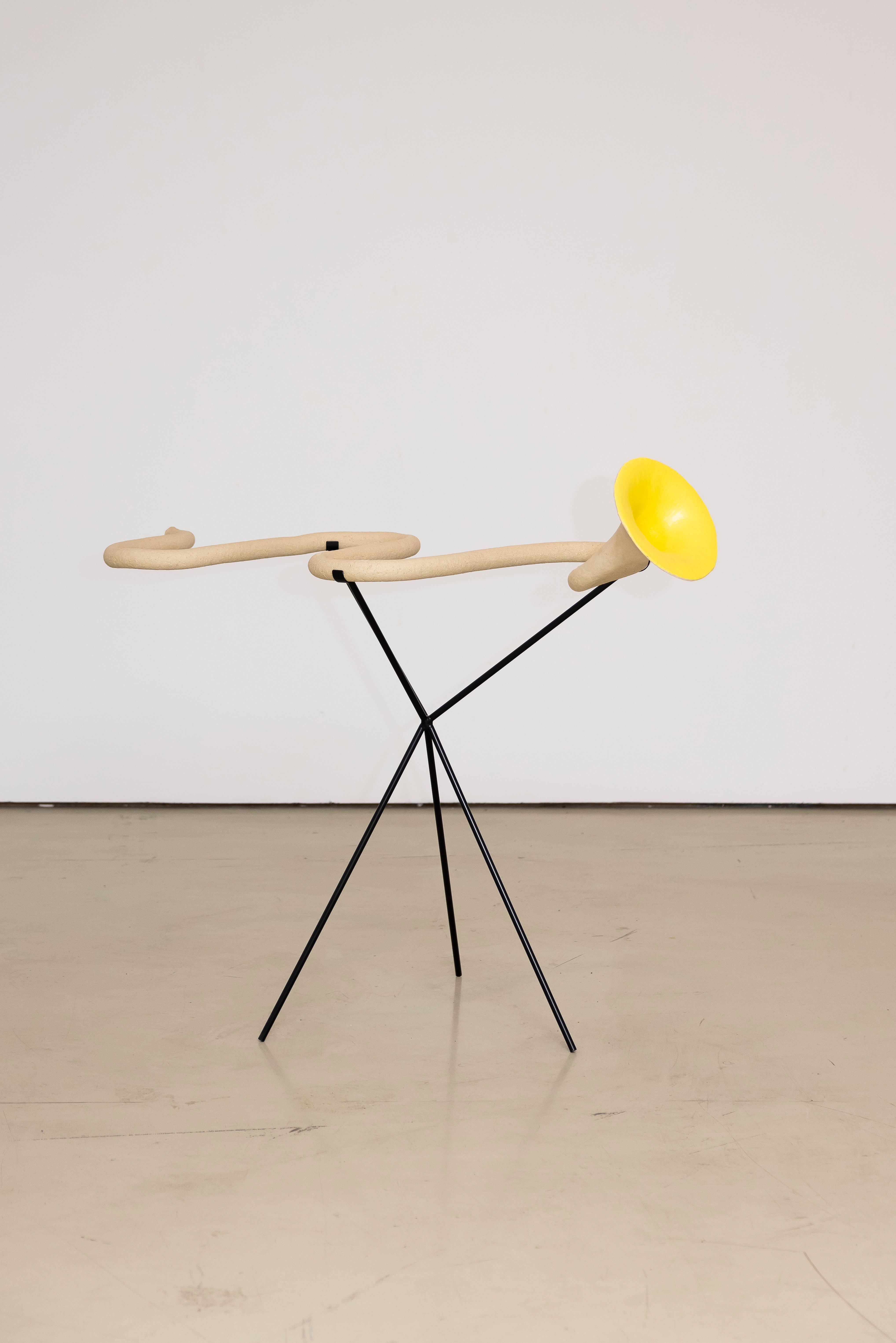
Echo (Serpent)
Ceramic, glaze and steel base. Ø 24x40x150 cm.
Solo exhibition Breath Pieces (part 2) at ifa Gallery Berlin (03.11.2023 – 04.02.2024)
Photo: Victoria Tomaschko
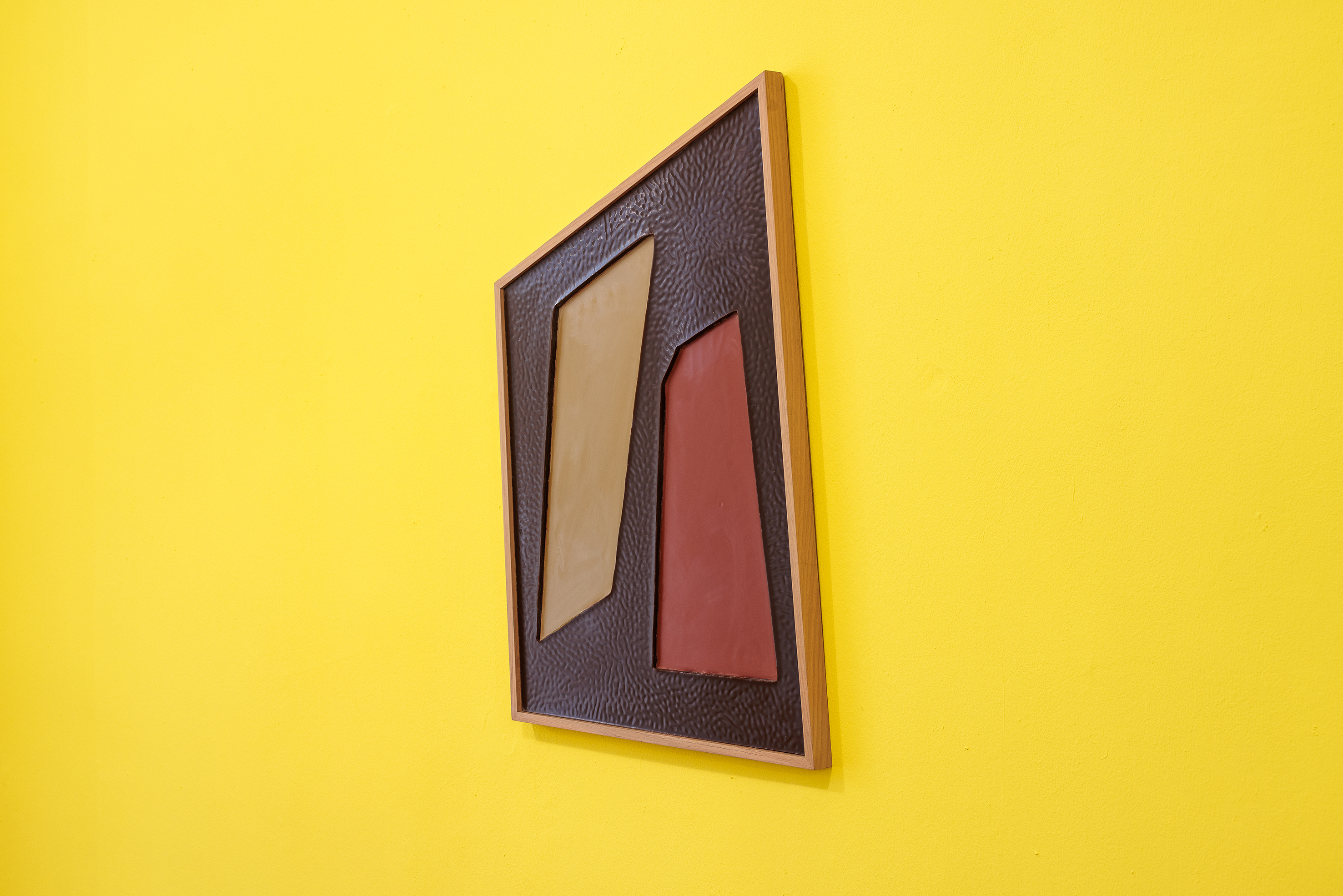
Subterranea, 2025
wax, wood and pigment
90 x 58 x 3,5 cm (framed)
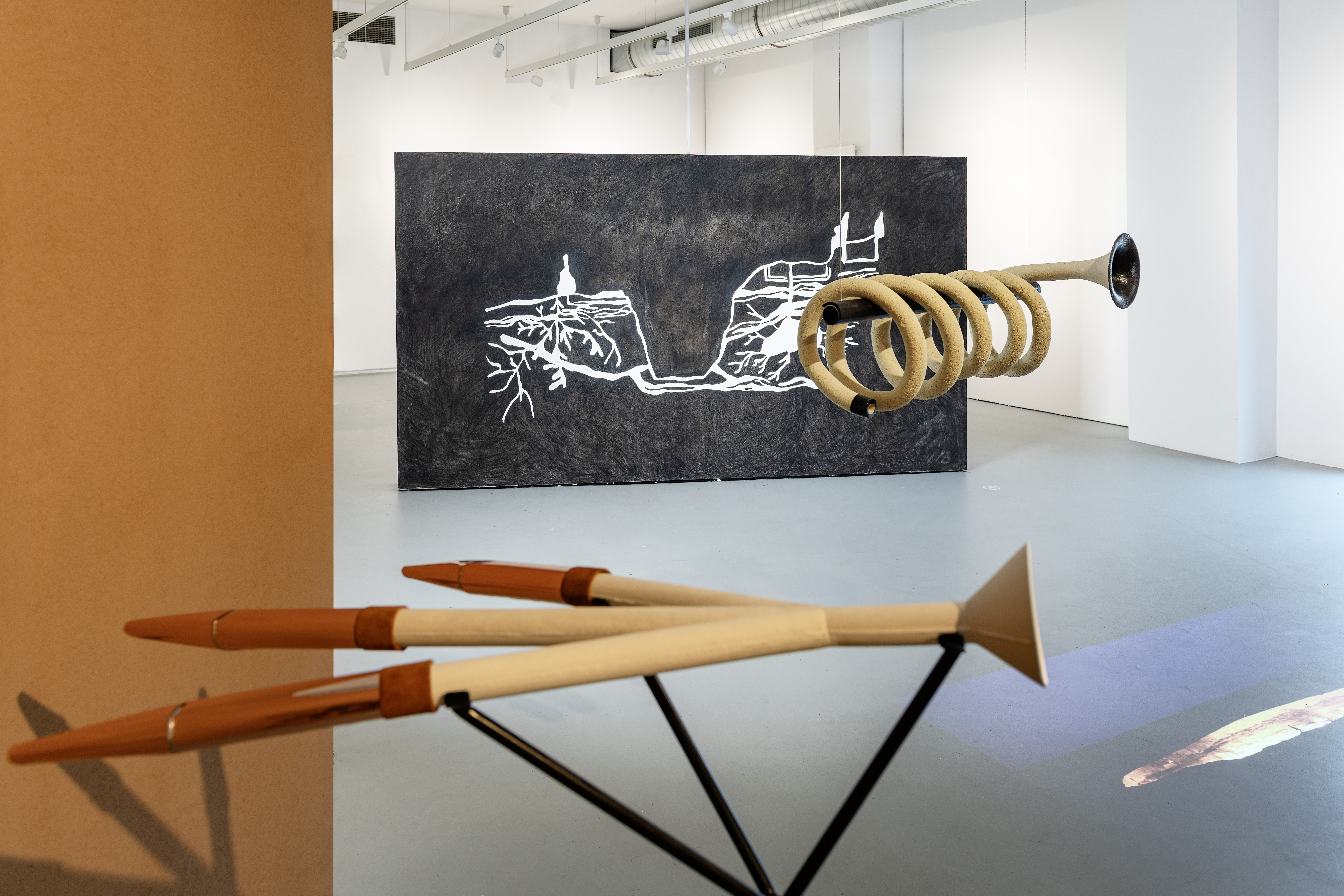
Exhibition view: Camila Sposati. Breath Pieces. ifa Gallery Stuttgart 2023
© ifa, Photo: Andreas Körner